
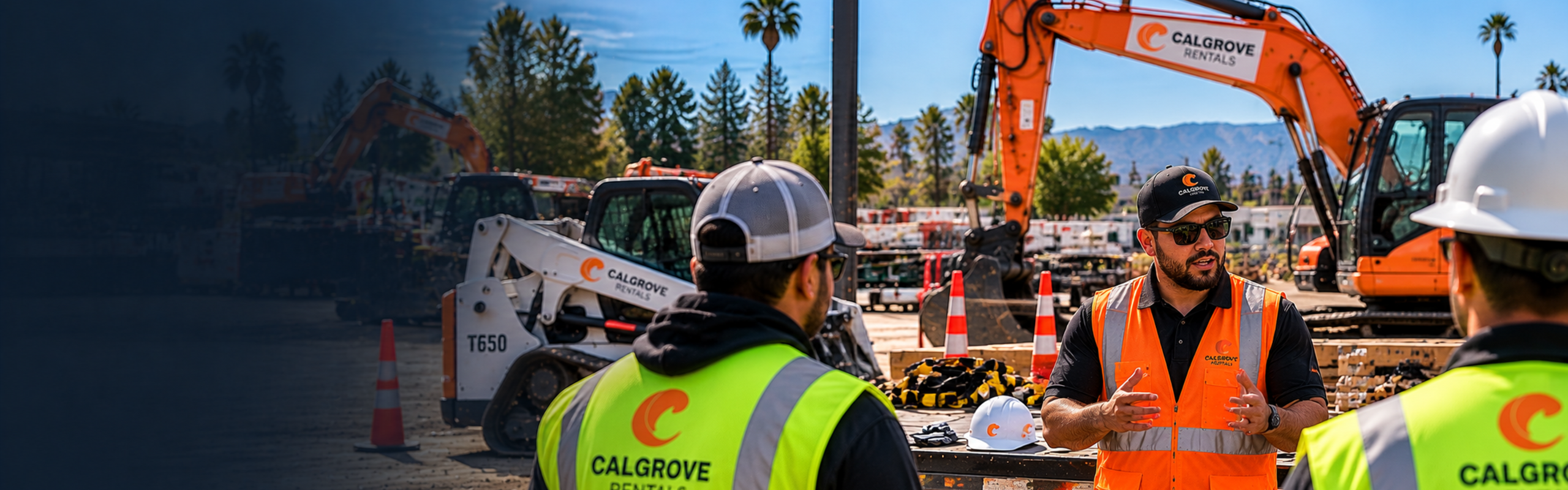
Equipment Safety Information
Safety and reliability are our highest priorities. Learn about our equipment safety inspection protocols, operator safety guidelines, and personal protective equipment requirements.
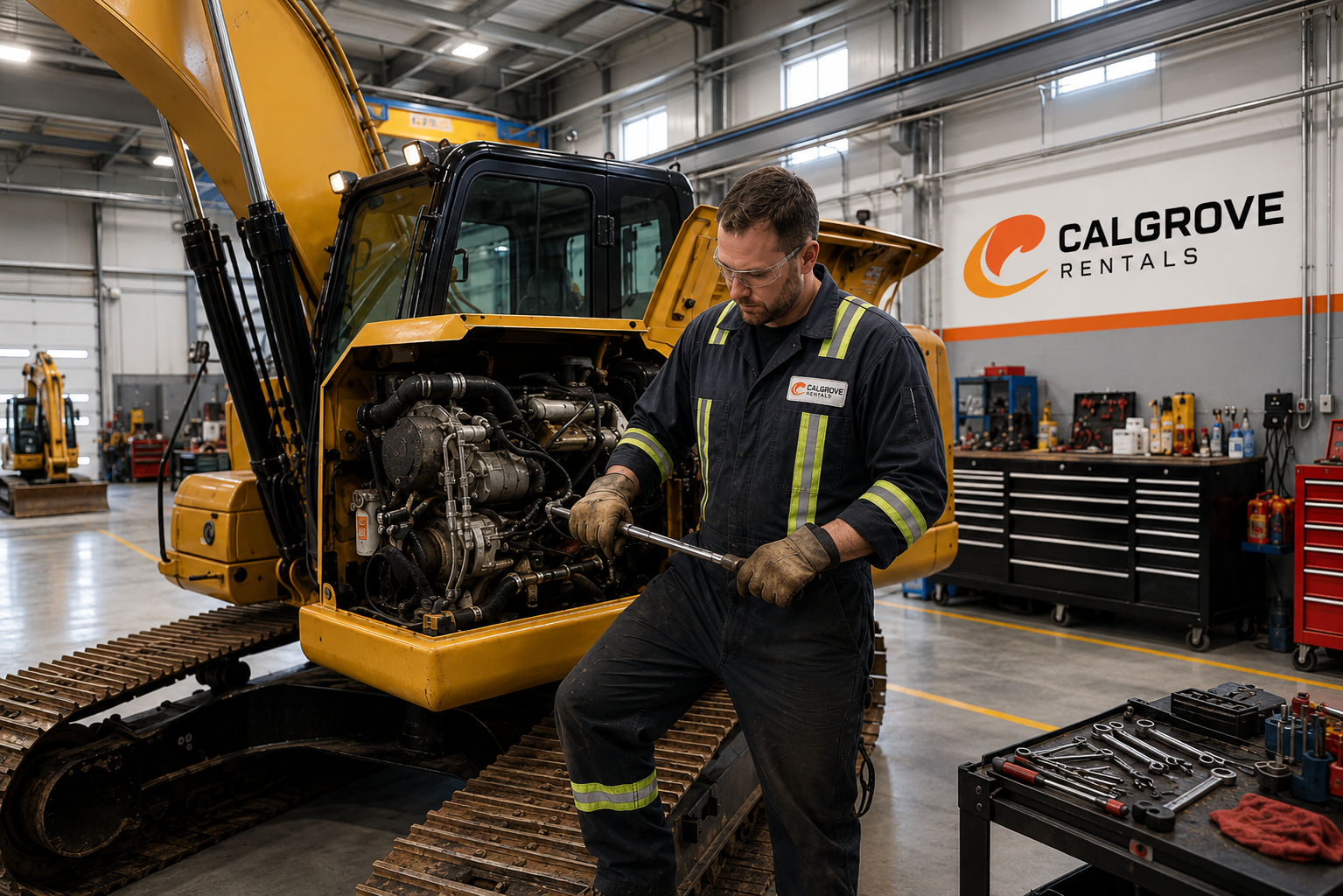
Uncompromising Commitment to Site Safety
At Calgrove Equipment Rentals, we believe that safety is not a checklist, but a core operational philosophy. Our fleet is regularly maintained and serviced, so every piece of iron delivered to your site is ready for the most demanding tasks.
We partner with site managers to provide comprehensive documentation, certification, and training resources, minimizing downtime and maximizing operational security.

Safety Inspected Fleet
Every unit is inspected before dispatch so it is ready for the job.

Routine Maintenance
Preventative servicing performed by our technicians to help prevent field failures.
Equipment Safety Standards & Operator Protocols
Job site safety is our highest priority. We provide safety documentation and operating guidelines with every rental.

Operator Training & Certification
Equipment must be operated by properly trained and qualified personnel, with certification provided where required by applicable safety regulations.

Daily Pre-Start Inspection
Perform visual walk-arounds, check fluid levels, test backup alarms and emergency shut-offs before each shift.

Mandatory PPE
Hard hats, safety glasses, high-visibility vests, and steel-toed boots must be worn in operating zones.

Load Limits & Stability
Never exceed the manufacturer load chart limits or operate on unstable slopes beyond rated incline.

Risk Assessment
Evaluate the work area for overhead hazards, underground utilities, unstable ground, and pedestrian traffic before starting operations.

Communication Protocols
Establish clear communication protocols (radios, hand signals) with ground personnel and other operators to ensure coordinated, safe movements.
Daily Inspection Protocol
Follow these five critical steps before turning the key.
Walkaround
Visual check for leaks, damage, and loose components.
Mechanical
Check fluid levels, belts, hoses, and tire pressure.
Functional
Test brakes, steering, lights, alarms, and controls.
Report
Document findings and report any defects immediately.
Operation
Only operate equipment after confirming it is in safe working condition.
Personal Protective Equipment (PPE)
Required safety gear for operating or working around heavy machinery.

Hard Hat
Protects against falling objects and impact.

Safety Glasses
Shields eyes from dust, debris, and chemical splashes.

Hi-Vis Vest
Ensures visibility to operators and passing vehicles.

Heavy-Duty Gloves
Protects hands from cuts, abrasions, and harsh materials.

Steel-Toe Boots
Guards against crushing injuries and provides traction.

Hearing Protection
Prevents hearing loss in high-decibel environments.
Before Operating Equipment
Essential pre-operation checks to perform before starting any machinery.

Review Manual
Understand specific controls and limits.

Check Fluids
Verify oil, coolant, and hydraulic levels.

Inspect Tires/Tracks
Check for damage, wear, and pressure.

Test Controls
Ensure brakes and steering function correctly.

Visual Inspection
Look for leaks, loose parts, or damage.

Verify Attachments
Ensure attachments are secure and correct.

Scan Surroundings
Identify blind spots and obstacles.
Assess Work Area
Check ground stability and overhead clearance.
Frequently Asked Questions

Ready to Get the Right Equipment?
Tell us what your project needs and our rental specialists will help you find the right equipment, rental plan, and delivery option.