
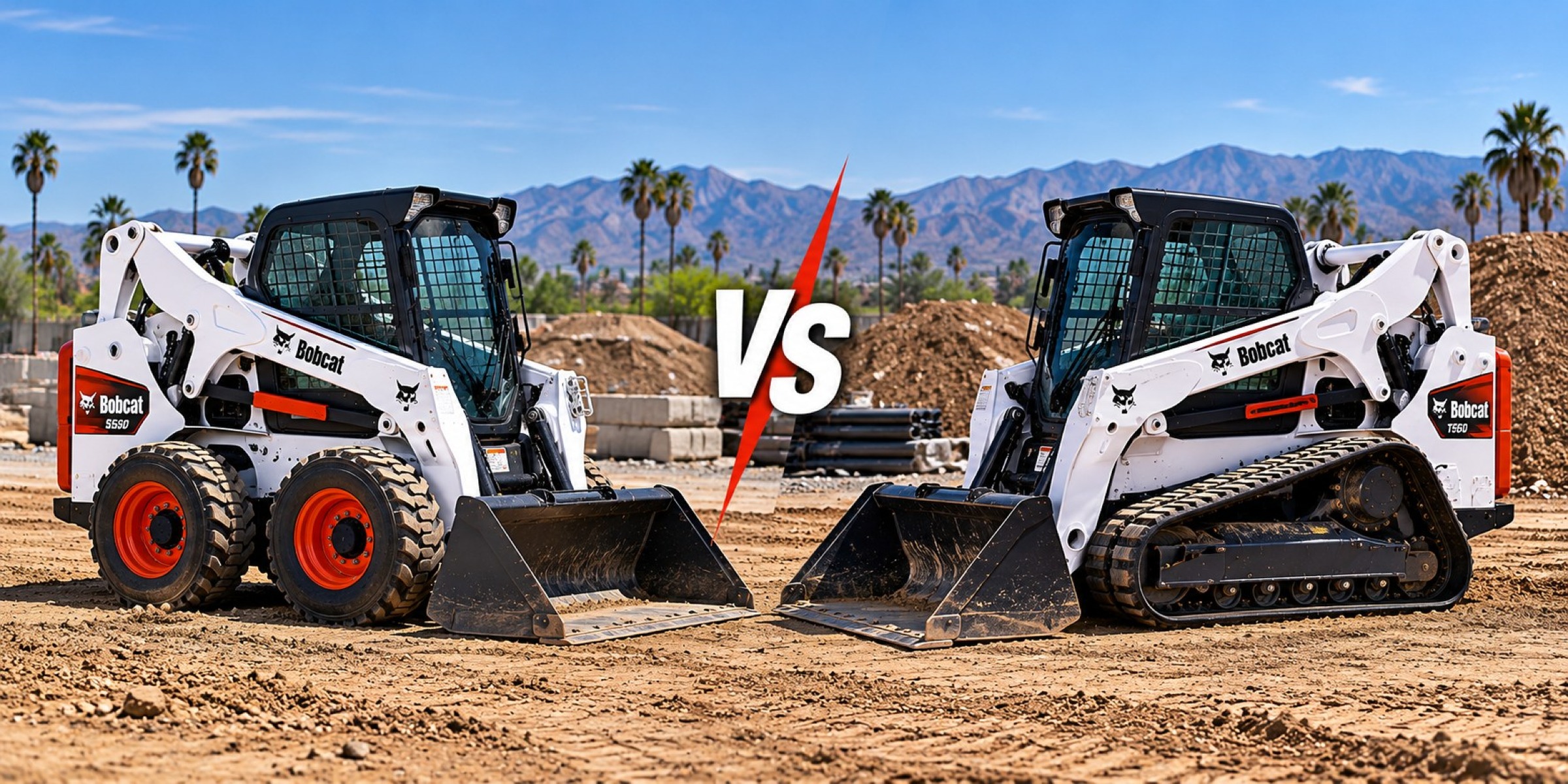
Skid Steer vs. Track Loader: Which One Do You Need?
Skid steers and compact track loaders are two of the most popular machines we rent. They look similar, use many of the same attachments, and are both small enough to work on residential lots. The big difference is what is underneath: wheels or tracks. That one choice changes how the machine handles terrain, how much it disturbs the ground, and how fast it gets around the site.
Here is how to decide which one fits your job.
What Is a Skid Steer?
A skid steer is a compact loader on four wheels. It steers by turning the wheels on one side faster than the other, which lets it spin in place. That tight turning makes it excellent in small spaces.
Strengths:
Fast on hard, level surfaces such as pavement, concrete, and compacted base.
Generally lower rental cost than a comparable track loader.
Lower operating cost when running on hard surfaces, since tires wear more slowly there than tracks do.
Well suited to material handling, loading, sweeping, and jobs on finished or paved areas.
Limitations: wheels can lose traction in mud, loose sand, or wet clay, and turning in place can tear up lawns and soft ground.
What Is a Compact Track Loader?
A compact track loader, often called a track skid steer, works the same way but runs on rubber tracks instead of wheels. The tracks spread the machine's weight over a much larger area.
Strengths:
Better traction and flotation in soft, muddy, sandy, or uneven ground.
Lower ground pressure, which means less rutting and less damage to turf.
More stable on slopes, and it keeps working after rain when a wheeled machine would get stuck.
A smoother ride and better control for fine grading.
Limitations: track loaders are usually slower on pavement, cost more to rent, and the tracks wear faster when run on concrete and asphalt.
Side-by-Side Comparison
Terrain: choose a skid steer for hard, dry, level ground. Choose a track loader for soft, wet, loose, or sloped ground.
Ground disturbance: a track loader is gentler on lawns and finished grades. A skid steer can scuff turf when it turns.
Speed: a skid steer is faster moving material across pavement or a large, firm site.
Grading: a track loader generally gives a smoother, more even finish.
Cost: a skid steer is usually the more budget-friendly rental.
Which One Should You Rent?
Rent a wheeled skid steer if you are:
Moving gravel, mulch, or pallets around a paved yard or driveway.
Cleaning up a construction site with a sweeper or grapple attachment.
Loading material into trucks on firm ground.
Working mostly on concrete or asphalt.
Rent a compact track loader if you are:
Grading a yard or preparing a pad for concrete or pavers.
Working on a hillside, soft soil, or sand.
Working in a lawn or landscaped area you want to protect.
Working after rain or on a site that stays muddy.
Consider a mini track loader for very tight spaces
For backyards with narrow side gates, a stand-on mini track loader such as a Toro Dingo can be the best of both worlds. It fits through spaces a full-size loader cannot, is light on the ground, and runs attachments such as buckets, augers, trenchers, and tillers.
Machine Size Matters, Too
Both skid steers and track loaders come in small, standard, and large sizes. Smaller machines fit tighter access and are easier to transport. Larger machines lift more, push more material, and run heavy attachments such as larger hydraulic breakers more effectively. Measure your access points and think about the heaviest load you will lift before choosing a size.
Plan Your Attachments
The attachment is often what gets the job done. Common choices include:
Buckets for digging, loading, and moving material.
Pallet forks for moving block, pavers, and palletized material.
Grapples for brush, debris, and demolition cleanup.
Augers for fence posts, footings, and tree planting.
Hydraulic breakers for concrete and rock.
Sweepers and brooms for cleanup on paved surfaces.
Tillers for soil preparation before seeding or sod.
Let us know which attachments you need when you reserve so we can make sure they are compatible with the machine.
Frequently Asked Questions
Is a track loader always better than a skid steer?
No. A track loader is better on soft or uneven ground, but a wheeled skid steer is often faster and more economical on pavement and firm surfaces.
Can I use a skid steer on my lawn?
You can, but turning a wheeled skid steer on turf tends to tear it up. If protecting the lawn matters, a compact track loader or mini track loader is usually the better choice.
Do skid steers and track loaders use the same attachments?
In most cases, yes. Many attachments fit both, but hydraulic attachments need to match the machine's hydraulic flow. Our team can confirm compatibility when you reserve.
Get the Right Loader for Your Job
Browse our skid steer and track loader rentals or request a quote. We offer delivery and pickup across Los Angeles and Ventura Counties, and our team is happy to help you choose between wheels and tracks.
Comments (0)
Leave a Comment
Your email address will not be published.
Rental Tips & Industry Insights
Stay informed with expert advice, equipment rental tips, safety best practices, and industry insights to help you complete every project with confidence.
Frequently Asked Questions
Ready to Get the Right Equipment?
Tell us what your project needs and our rental specialists will help you find the right equipment, rental plan, and delivery option.