
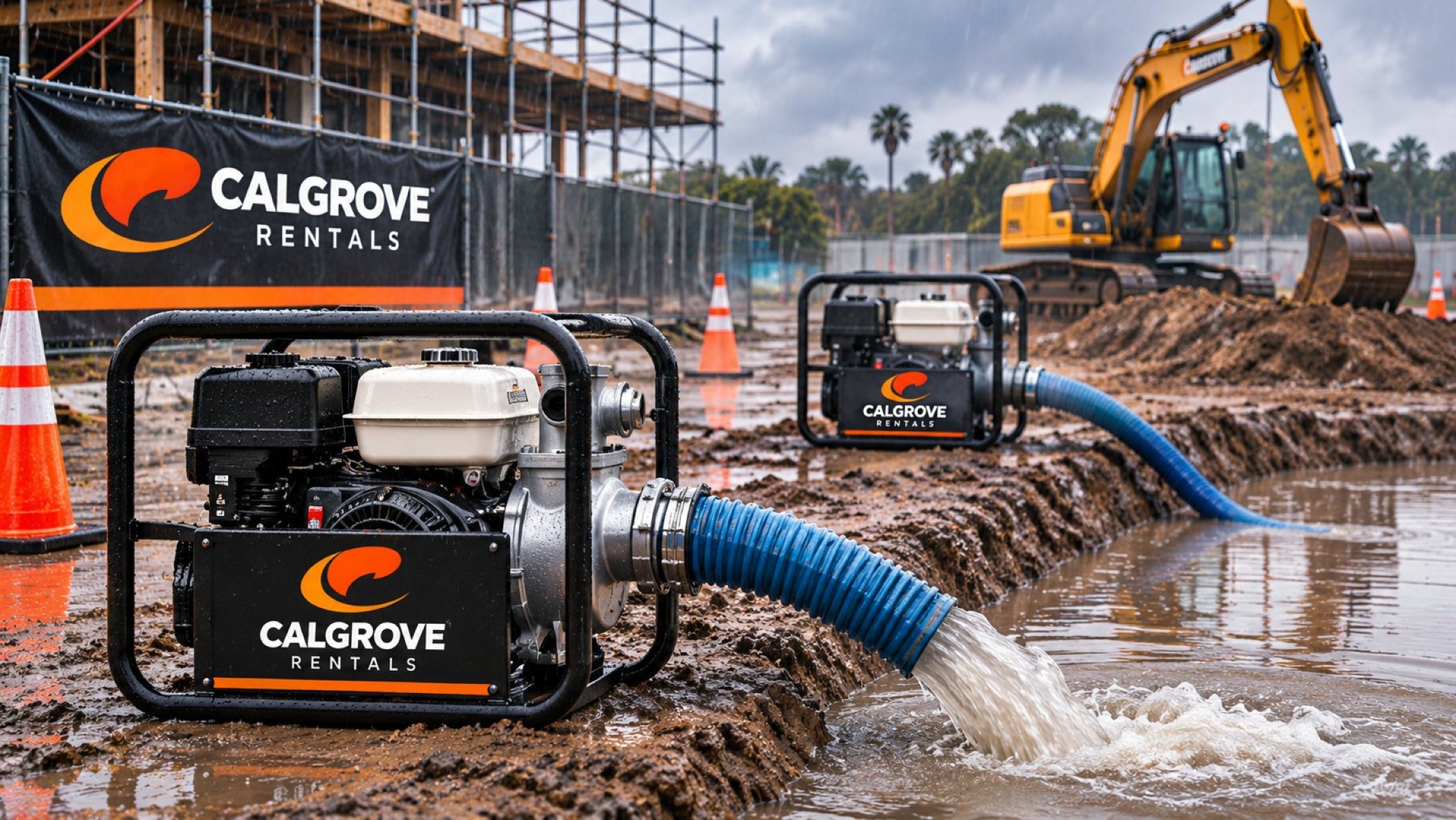
How to Prepare Your Construction Jobsite for Rain in Southern California
How to Prepare Your Construction Jobsite for Rain in Southern California
Rain in Southern California can create unexpected challenges for construction projects. Flooded trenches, muddy access roads, standing water, and moisture damage can quickly interrupt work and lead to costly delays.
Whether you're managing a residential development, commercial construction project, or renovation, preparing your jobsite before a storm can help protect your equipment, materials, and schedule.
Here are seven ways to prepare your construction site for rainy weather.
1. Prepare Your Construction Site Before the Storm
The best time to prepare for rain is before the first storm arrives.
Walk through your jobsite and identify low-lying areas where water could accumulate. Check drainage routes, secure loose materials, and make sure equipment is positioned away from areas prone to flooding.
Before rain arrives:
Clear debris from drainage paths.
Inspect trenches and excavations for potential water accumulation.
Move moisture-sensitive materials into covered storage.
Secure equipment and loose jobsite materials.
Identify safe access routes for workers and delivery vehicles.
A little preparation can help prevent major interruptions once the rain begins.
2. Keep Water Pumps Ready for Flooded Jobsites
Standing water is one of the most common problems contractors face after heavy rainfall.
Water can accumulate in trenches, foundations, excavations, and low-lying areas, preventing crews from safely continuing work.
Having the right water pump rental available can make a significant difference.
Depending on the application, contractors may need:
Trash pumps: Useful for moving water that contains mud, sand, and small debris.
Submersible pumps: Designed to remove water from pits, excavations, and other areas where the pump can be submerged.
General-purpose water pumps: Suitable for transferring relatively clean water.
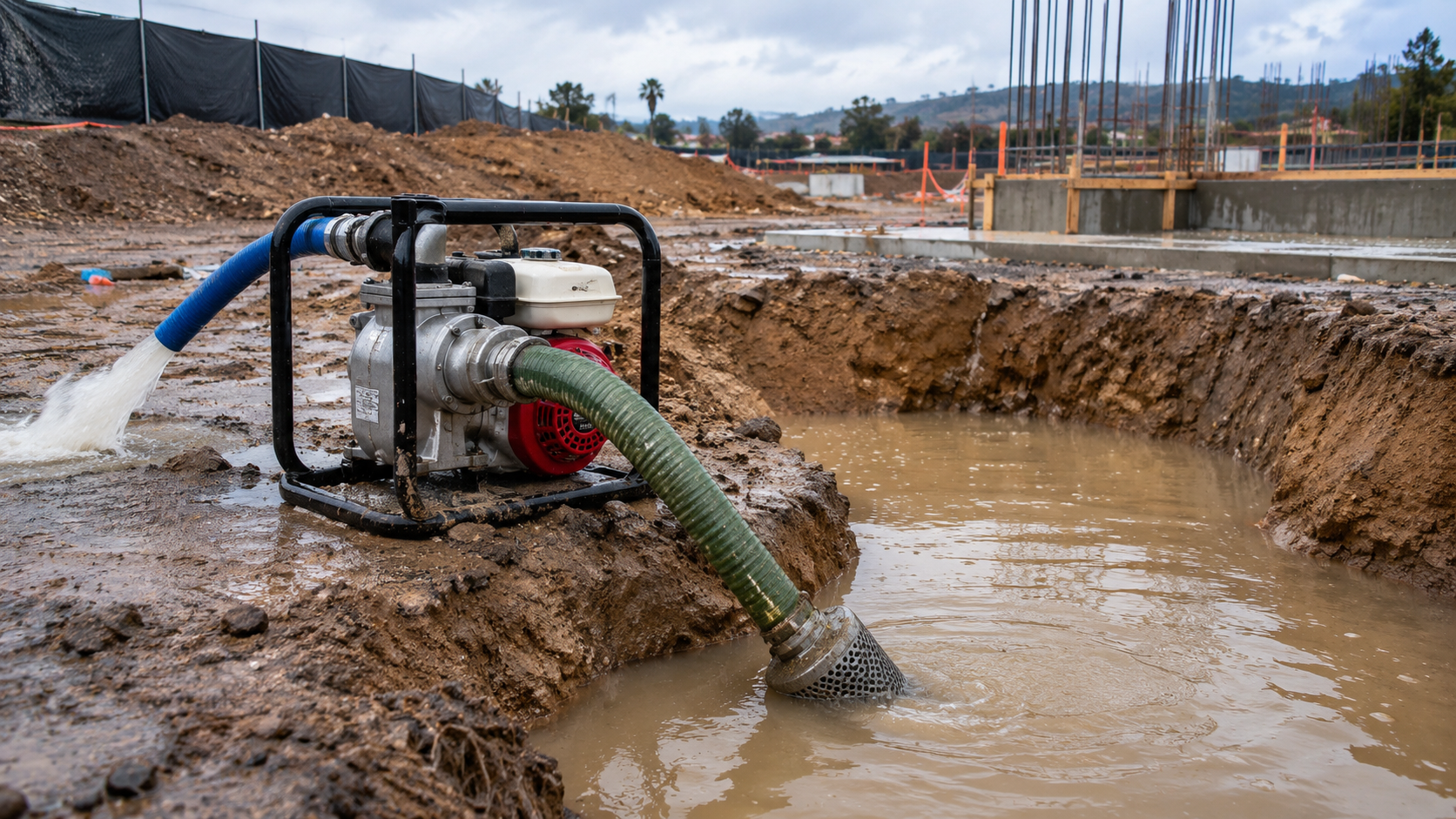
Portable water pump removing standing water from a construction excavation.
Choosing the correct pump depends on water conditions, pumping distance, and the amount of water that needs to be removed.
3. Protect Your Equipment and Materials from Rain Damage
Construction equipment is designed for demanding environments, but unnecessary exposure to heavy rain and standing water can still create problems.
Whenever possible, park equipment on stable, elevated ground and avoid leaving machines in areas where flooding is likely.
Protect electrical tools, generators, extension cords, and moisture-sensitive building materials from direct exposure to water.
After a storm, inspect equipment for visible damage before returning it to service.
Taking these precautions can reduce downtime and help keep equipment ready for the next phase of construction.
4. Managing Muddy Construction Site Conditions
Rain can quickly turn exposed soil into thick mud, creating problems for equipment movement, material deliveries, and jobsite access.
Muddy conditions can reduce traction, increase the risk of equipment becoming stuck, and make routine construction tasks more difficult.
Tracked equipment, including compact track loaders, may offer better mobility than wheeled equipment in certain soft-ground conditions.
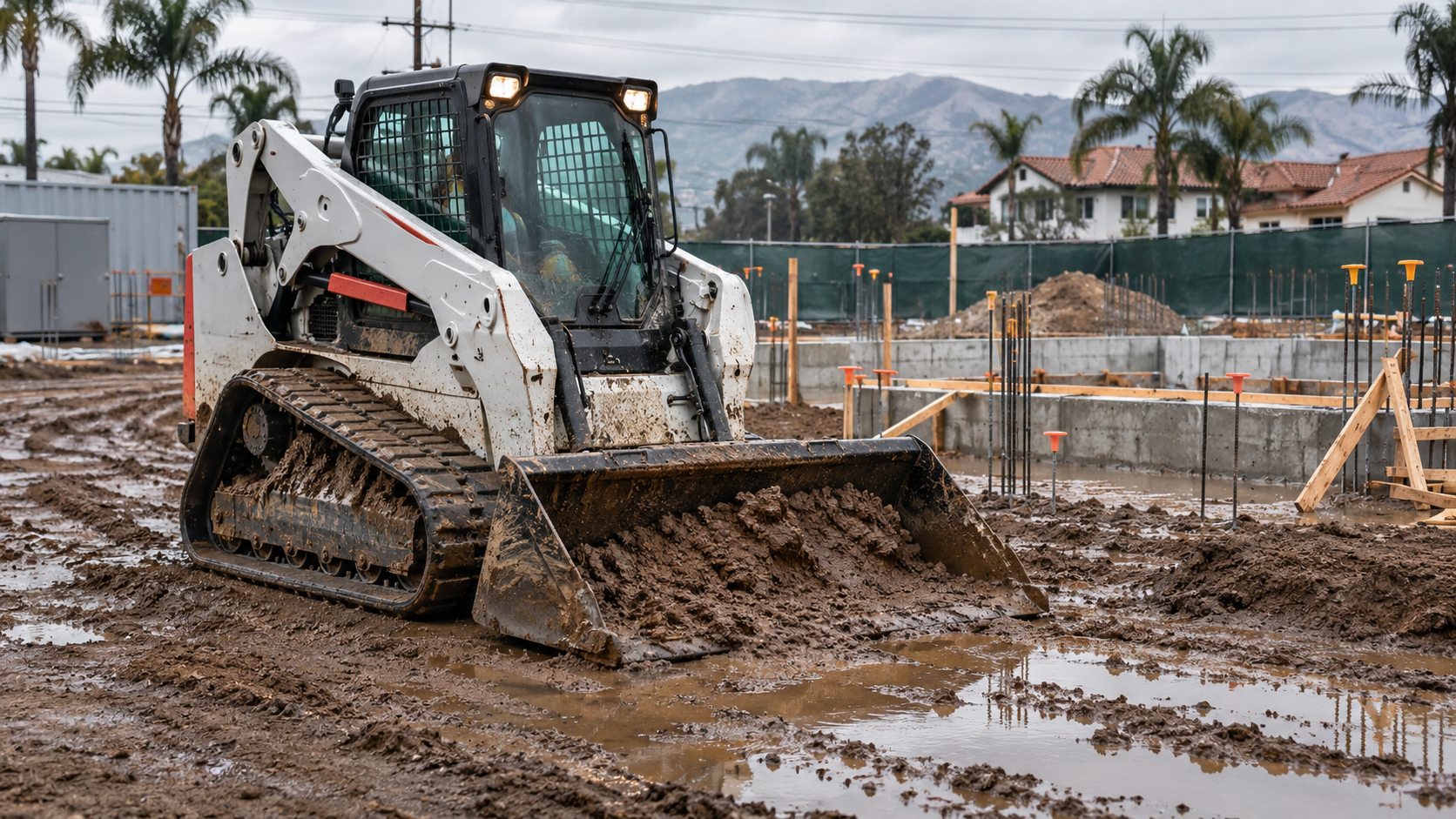
Compact track loader operating on a muddy construction jobsite.
Before operating equipment, evaluate ground stability and avoid areas where saturated soil could create unsafe conditions.
Contractors should also consider temporary access routes and proper drainage to help keep jobsites functional during rainy weather.
Explore Calgrove's Rental Equipment
5. Drying Out Buildings After Heavy Rain
Rain-related problems don't always end when standing water is removed.
Moisture can remain trapped inside buildings, particularly during remodeling, restoration, and interior construction projects.
Excess moisture can delay flooring installation, painting, drywall work, and other finishing activities.
Commercial drying equipment can help contractors manage moisture and improve drying conditions.
Common equipment includes:
Dehumidifiers: Help remove excess moisture from indoor air.
Air movers: Promote airflow across wet surfaces to support drying.
Air scrubbers: Help filter airborne particles during certain restoration and cleanup activities.
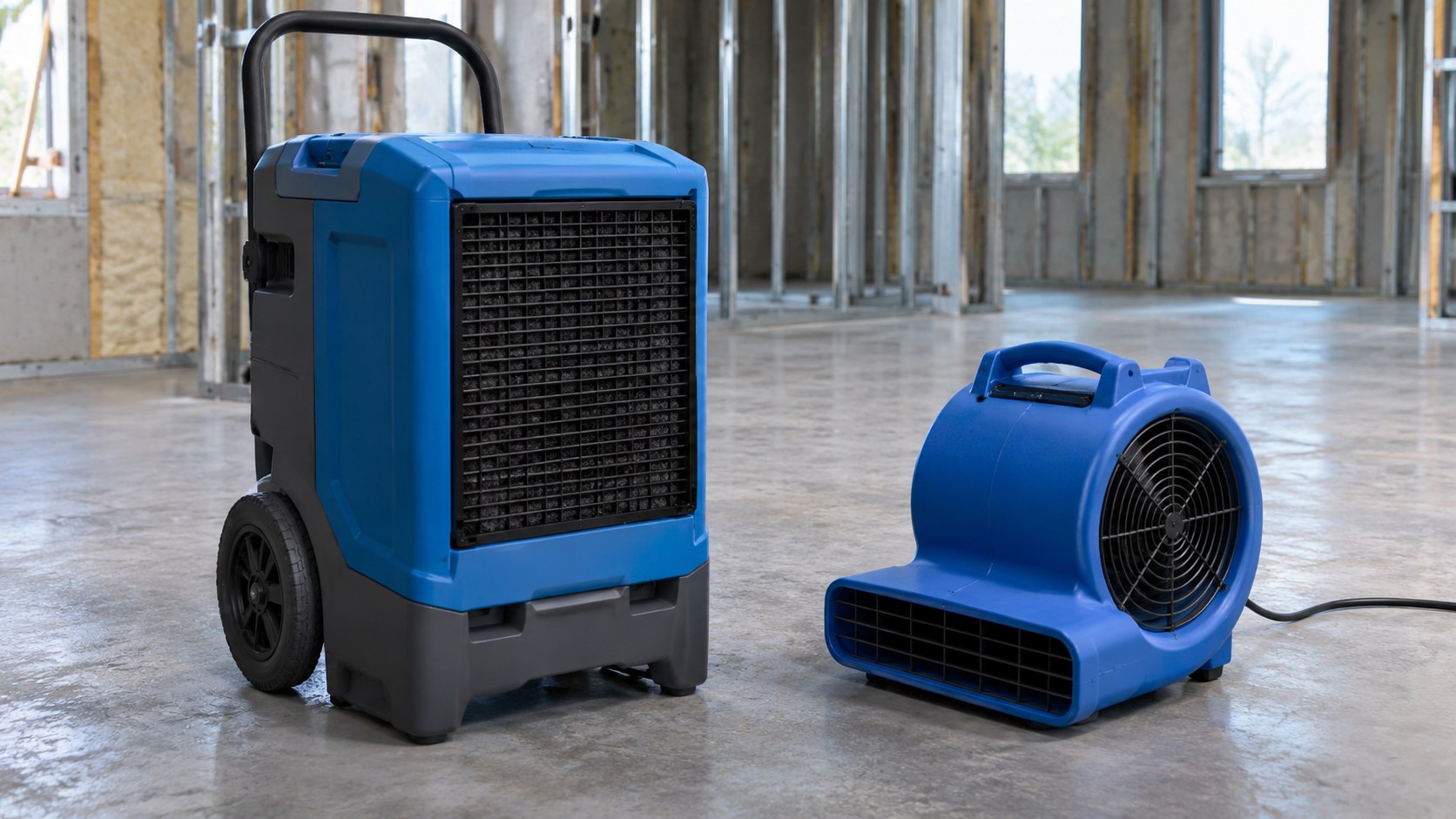
Commercial dehumidifier and air mover used for indoor moisture control.
Using the appropriate drying equipment can help crews address moisture problems before continuing with moisture-sensitive construction work.
Browse Calgrove's Remediation Equipment
6. Don't Wait Until the Rain Starts to Rent Equipment
When a major storm is forecast, demand for water pumps and other cleanup equipment can increase quickly.
Waiting until a jobsite is already flooded may leave contractors scrambling to find available equipment.
Planning ahead allows your team to identify potential equipment needs, coordinate rentals, and prepare for changing weather conditions.
Consider keeping a list of equipment that may be needed during the rainy season, including water pumps, hoses, compact equipment, dehumidifiers, and air movers.
Request an Equipment Rental Quote
7. Inspect Your Jobsite Before Resuming Work
Once the rain stops, take time to evaluate site conditions before restarting operations.
Inspect excavations, access roads, equipment staging areas, and electrical installations for potential hazards.
Pay particular attention to:
Standing water around trenches and foundations.
Unstable or saturated soil.
Muddy equipment access routes.
Water-damaged materials.
Electrical equipment exposed to moisture.
Changes in excavation or trench conditions.
Trenches and excavations should be inspected by a competent person as required before workers enter, including following rainstorms or other hazard-increasing events.
Resuming work safely is more important than rushing to recover lost time.
Stay Prepared with Calgrove Rentals
Rainy weather doesn't have to bring every construction project to a standstill.
With proper planning, drainage preparation, and the right rental equipment, Southern California contractors can better manage wet jobsite conditions and reduce unnecessary downtime.
Calgrove Rentals supports contractors throughout Southern California with equipment rental solutions for construction, maintenance, and restoration projects.
Whether you need water pumps for jobsite dewatering, compact equipment for muddy conditions, or drying equipment after heavy rain, our team can help you identify suitable rental options.
Frequently Asked Questions
What equipment is useful for flooded construction sites?
Water pumps are commonly used to remove standing water from trenches, excavations, and low-lying areas. The appropriate pump depends on water depth, debris, pumping distance, and site conditions.
Can construction equipment operate in muddy conditions?
Some tracked equipment may perform better than wheeled equipment on soft ground, but saturated soil can still create serious stability and traction hazards. Site conditions should be evaluated before operating.
What equipment helps dry out a building after rain?
Commercial dehumidifiers and air movers are commonly used to help manage indoor moisture and promote drying after water intrusion.
When should contractors prepare for rainy weather?
Ideally, before storms are forecast. Early preparation gives contractors time to inspect drainage, protect materials, and arrange necessary rental equipment.
Comments (0)
Leave a Comment
Your email address will not be published.
Rental Tips & Industry Insights
Stay informed with expert advice, equipment rental tips, safety best practices, and industry insights to help you complete every project with confidence.
Frequently Asked Questions

Ready to Get the Right Equipment?
Tell us what your project needs and our rental specialists will help you find the right equipment, rental plan, and delivery option.