
How to Choose the Right Excavator for Your Job
An excavator is one of the most useful machines you can put on a jobsite. It can dig footings, trench for utilities, clear debris, load trucks, and, with the right attachment, break concrete or drill post holes. But picking the wrong size costs you time and money. A machine that is too small struggles to reach depth and cycles slowly. One that is too big may not fit through the gate, can damage finished surfaces, and costs more to rent and transport than the job needs.
This guide explains the main excavator size classes, what each is best at, and the questions to answer before you call. If you are still unsure after reading, our team at our San Fernando, Chatsworth, and Whittier locations can help you match a machine to your job.
Excavator Size Classes at a Glance
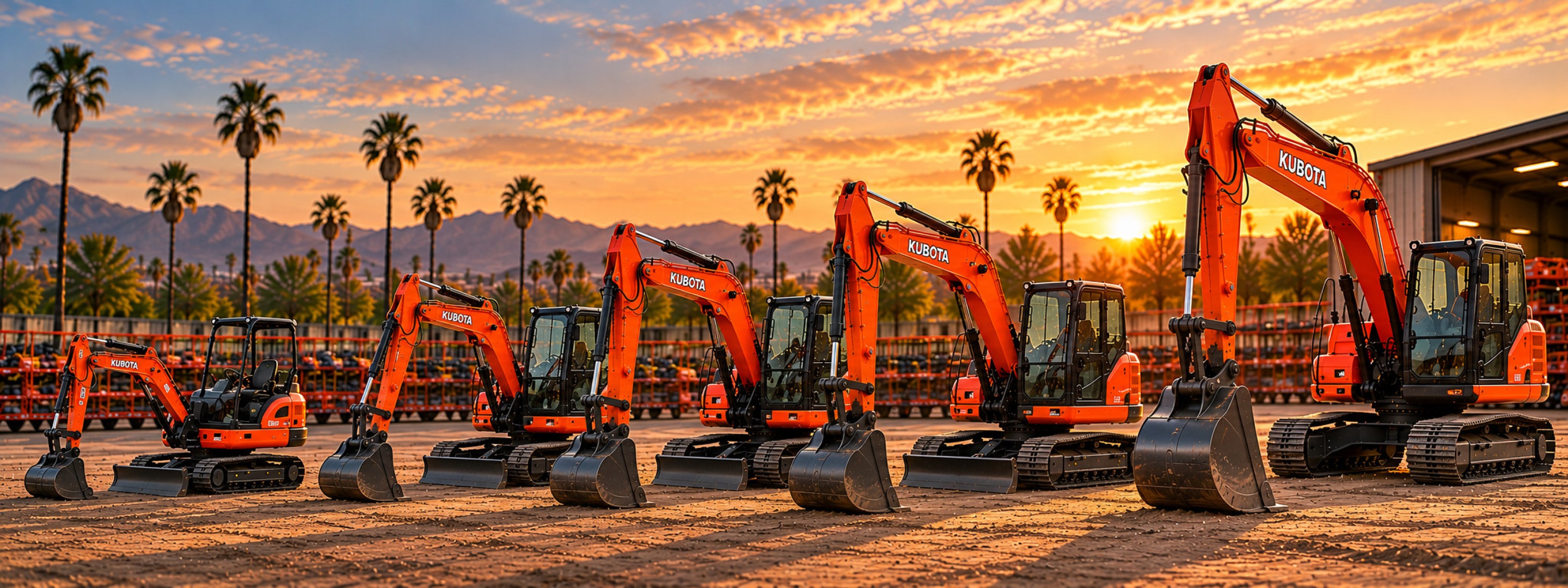
Excavators are usually grouped by operating weight. Weight is a good shorthand for what a machine can do: heavier excavators generally dig deeper, reach farther, and lift more, but they also need more room and a bigger trailer.
Mini excavators (roughly 4,000 to 8,000 lb)
The smallest machines are built for tight access. Many can fit through a standard backyard gate, and some have retractable tracks or a zero-tail-swing design, so the back of the machine stays inside the tracks as it turns. That makes them a strong choice next to walls, fences, and houses.
Best for: backyard landscaping, irrigation and sprinkler trenches, small footings, fence and post holes, pool and spa prep, interior demolition, and jobs where lawn or hardscape must be protected.
Keep in mind: smaller machines have less dig depth and lifting capacity, so large volumes of soil will take longer to move.
Larger mini excavators (roughly 11,000 to 18,000 lb)
Stepping up in size gives you noticeably more digging force, depth, and reach while keeping the machine compact enough for most residential and light commercial sites.
Best for: utility and sewer lateral trenches, foundation excavation, grading and site prep, loading dump trucks, and demolition with a hydraulic breaker.
Keep in mind: these machines need a wider access path and a heavier-duty trailer and tow vehicle if you plan to haul it yourself.
Mid-size excavators (around 30,000 lb)
Mid-size machines are production diggers. They move a lot of material quickly, handle deeper trenches, and can swing heavier loads such as pipe sections or large rocks.
Best for: commercial site work, larger foundations, deeper utility trenches, heavy demolition, and projects where cycle time matters.
Keep in mind: a machine this size needs open space to work and is typically delivered by a transport truck rather than towed behind a pickup.
Large excavators
Full-size excavators are used for mass excavation, quarry work, and large infrastructure projects. Most residential and light commercial jobs in Los Angeles and Ventura Counties do not need a machine in this class. If you think your project does, give us a call and we will talk through the options with you.
Five Questions to Answer Before You Rent
1. How deep and how far do you need to dig?
Start with the deepest point of your trench or excavation, then add a little extra room for bedding material or over-dig. Compare that to the machine's maximum dig depth. If you also need to load a truck, check the dump height so the bucket clears the side of the bed.
2. How much room is there to get in and work?
Measure the narrowest point on the route to your work area: gates, side yards, driveways, and doorways. Look up, too. Overhead power lines, eaves, and tree limbs limit how high the boom can swing. In tight spaces, a zero-tail-swing machine can make a big difference.
3. What is the ground like?
Excavators run on tracks, which spread their weight, but soft soil, slopes, and finished surfaces still matter. Rubber tracks are gentler on pavement and driveways than steel tracks. If you have to cross a lawn or hardscape, plan a path and consider ground protection mats.
4. What attachments will you need?
The bucket is only the start. Many jobs go faster with a hydraulic breaker for concrete and rock, an auger for post and footing holes, or a compaction wheel for backfilling trenches. Tell us about the whole job, not just the digging, so we can make sure the machine you rent can run the attachments you need.
5. How will the machine get to the site?
Smaller excavators can often be towed with a properly rated truck and trailer. Larger machines are usually delivered. Calgrove offers delivery and pickup throughout Los Angeles and Ventura Counties, so you can have the excavator dropped at the jobsite and focus on the work.
Matching Common Jobs to Machine Size
Sprinkler lines or a small drainage trench in a backyard: a small mini excavator, often paired with a narrow trenching bucket.
Post holes for a fence or patio cover: a mini excavator with an auger attachment.
Breaking out an old driveway or patio slab: a mini excavator with a hydraulic breaker, plus a larger machine or loader if you are hauling a lot of debris.
Sewer lateral or utility trench: a larger mini excavator, with a compaction wheel for backfill.
Foundation dig or commercial site prep: a larger mini excavator or a mid-size excavator, depending on volume and depth.
Safety Reminders
Before any digging in California, call 811 at least two working days ahead so underground utilities can be marked. Keep people out of the machine's swing radius, never lift loads over workers, and read the operator's manual and load chart for the specific machine you rent. If you have not run an excavator before, ask our team for a walkthrough of the controls when you pick it up.
Frequently Asked Questions
What size excavator do I need for a backyard project?
For most backyard landscaping, irrigation, and small footing jobs, a mini excavator in the 4,000 to 8,000 lb range is a good fit because it can get through tighter access points and is easier on the yard.
Can I tow a mini excavator myself?
Often, yes, if your truck and trailer are rated for the combined weight. Check your tow vehicle's rating before you plan to haul it. If you would rather not tow, we can deliver and pick up the machine.
What if I am not sure which size is right?
Tell us what you are digging, how deep, and what the access is like. Our team will help you choose the right machine and attachments for the job.
Ready to Rent?
Browse our excavator rentals or request a quote. Let us know the equipment, attachments, rental length, and jobsite location, and our team will confirm availability, rates, and delivery or pickup details.
Comments (0)
Leave a Comment
Your email address will not be published.
Rental Tips & Industry Insights
Stay informed with expert advice, equipment rental tips, safety best practices, and industry insights to help you complete every project with confidence.
Frequently Asked Questions
Ready to Get the Right Equipment?
Tell us what your project needs and our rental specialists will help you find the right equipment, rental plan, and delivery option.